
Juvenile diabetes.
That’s what we used to call it.
Forty years ago, and wow, typing that makes me realize how old I am, type 1 diabetes was known as juvenile diabetes. Type 2 diabetes was called adult-onset diabetes. The names were simple, they described when you were supposed to get them.
Life, of course, ignored those rules.
Over time, due to a combination of genetics, lifestyle changes, and the universe’s fondness for irony, adults began getting type 1 diabetes and kids began developing type 2 diabetes. The labels stopped making sense, even if the diseases themselves still demanded daily attention, usually at inconvenient times like 3 a.m.
For kids diagnosed with diabetes today, there is no shortage of support.
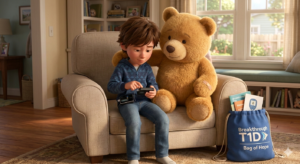
Breakthrough T1D, formerly the Juvenile Diabetes Research Foundation, and before that the Juvenile Diabetes Foundation, offers “Bag of Hope” kits filled with educational materials and Rufus the Bear, who patiently teaches children about blood sugar checks without ever complaining or asking, “Did you pre-bolus?”
The American Diabetes Association provides a Youth and Family Corner, diabetes camps, and advocacy programs like Safe at School to make sure kids’ medical needs are protected in classrooms.
Children with Diabetes supports entire families through a large online community and conferences across the United States.
The Diabetes Link focuses on teens and college students navigating independence with diabetes along for the ride, usually packed somewhere between laundry they forgot to do and late-night pizza decisions.
There’s even a Children’s Diabetes Foundation from the Barbara Davis Center for Diabetes dedicated to patient support, awareness, and research.
If you are a child, teen, or young adult with diabetes, there are communities ready to catch you, a kind of bag of hope waiting.
But what happens when you grow up?
At 18, many people with type 1 diabetes “graduate” from pediatric endocrinology and move to adult care. That makes sense. Adults have different physiology, different risks, and different needs.
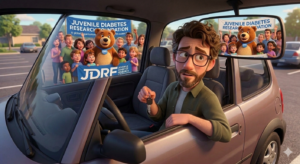
But diabetes doesn’t suddenly become easier just because you can vote, pay taxes, or develop strong opinions about lawn care.
You’re not ‘officially’ kicked out of youth organizations, but showing up to a Breakthrough T1D social event where you are the only one with diabetes who drove themselves there feels… questionable.
For adults, support becomes surprisingly scarce.
We have groups for ages 1–18… and then, apparently, we are expected to figure out the remaining 60–80 years on our own.
That is, until now.
GrownUp T1D was created to improve the lives of adults living with type 1 diabetes, offering community, advocacy, education, and something many of us didn’t realize we were missing: peers who truly get it.
Founder Kelly Dawes, who has lived with type 1 diabetes for 44 years, noticed that most diabetes resources focused on children and young adults. When her sister was diagnosed in her 50s and left the hospital with more questions than answers, it confirmed what she already suspected: adults with type 1 diabetes needed a home too.
How did someone not think of this sooner?

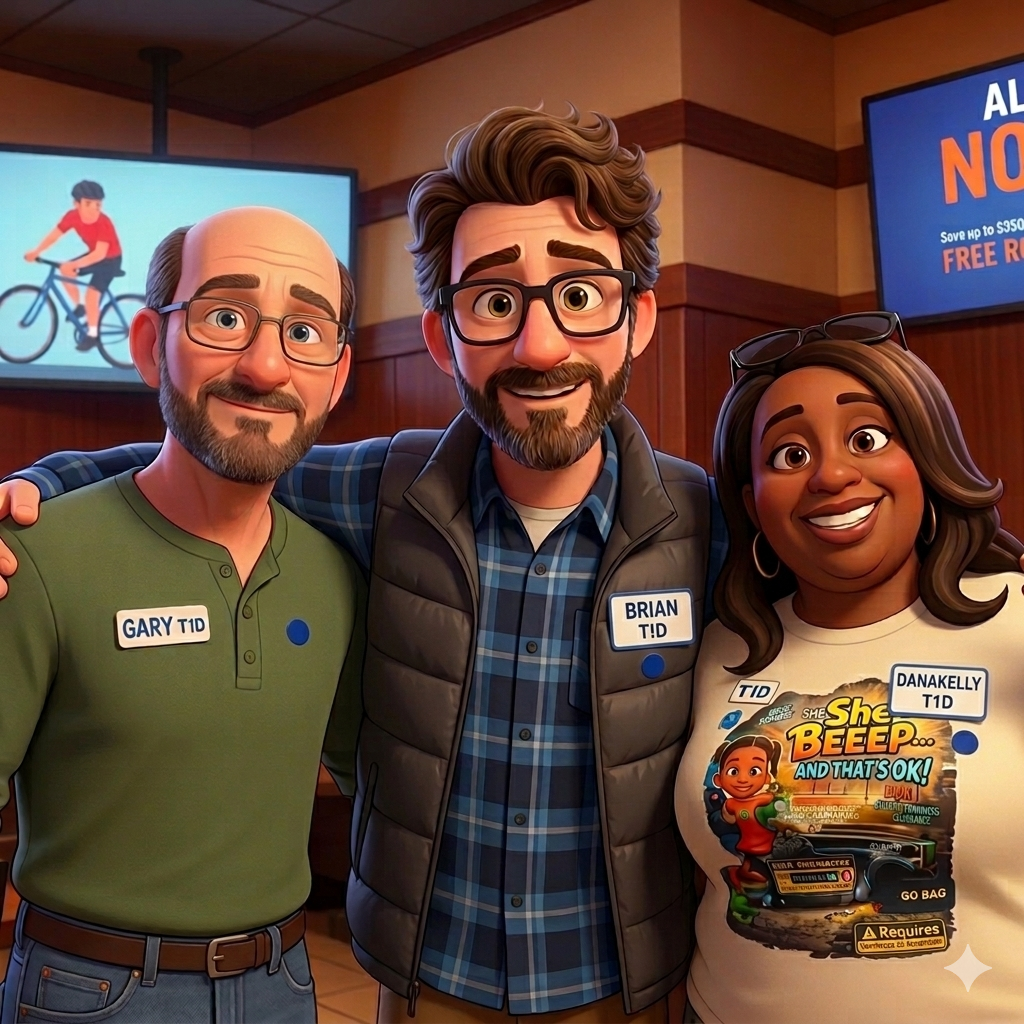
Last Saturday, about 25 adults with diabetes, along with partners and spouses, gathered at a Dave & Buster’s in the Philadelphia area for the first Grownup T1D meet-up here.
And yes, the irony of an adult diabetes support group meeting in a place filled with arcade games and alcohol was not lost on me. Nothing says “responsible glucose management” quite like flashing lights, bar food, and competitive skee-ball.
And it was… amazing.
Even for someone deeply involved in the diabetes world, I had forgotten how powerful it feels to be surrounded by people who simply understand, no explanations required.
We introduced ourselves and shared the craziest thing someone without diabetes had ever said to us:
“Should you be eating that?”
“My uncle had diabetes. He’s dead now.”
And my personal favorite:
“If you just take cinnamon every day, you could cure it.”
Quick fact: cinnamon does not cure diabetes. It does make excellent French toast, less evidence-based medicine and more evidence-based eating.
We also compared years lived with diabetes. The unofficial winner had lived with it for 65 years, diagnosed at age five. That’s incredible. It’s only now that I realize we could have given her arcade credits for every year she had diabetes, maybe next time.
And then we just… hung out.
No lectures.
No carb-counting demonstrations.
No reminders about what we should be doing better.
Just a group of people with non-functioning pancreases talking about work, families, vacations, and life, occasionally interrupted by CGM alarms that nobody felt the need to apologize for because everyone understood.
On the drive home, I realized something surprising: I had forgotten how hard diabetes actually is. Not because it had gotten easier, but because managing it every day had become normal.
Being in that room reminded me that none of us are doing this alone, even when it feels that way.
Maybe adult support groups didn’t exist 40 years ago because there simply weren’t enough of us living long enough to need them.
But there are now.
Technology has improved. Care has improved. People with type 1 diabetes are living longer, fuller lives. And as more children are diagnosed, and as adults are diagnosed with LADA (Latent Autoimmune Diabetes in Adults), this community will only grow.
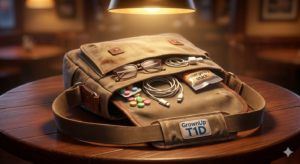
Kids receive Bags of Hope. Adults don’t get anything like that. But maybe someday we will.
Maybe years from now, newly diagnosed adults will receive their own welcome kit, a Bag of Experience. Instead of Rufus the Bear, maybe it will include reading glasses, a phone charger, backup glucose tabs to hide in every pocket, and snacks that don’t spike blood sugar… at least not too much. And no cinnamon.
Or maybe the real Bag of Hope is simpler than that.
Maybe it’s just a room full of people who understand why your phone alarms go off at 2 a.m., why you carry snacks everywhere, and why you can laugh about a pancreas that refuses to do its job.
Last Saturday, I found that bag.
And it turns out, hope looks a lot like friendship, plus a few people comparing glucose graphs between rounds of arcade games.
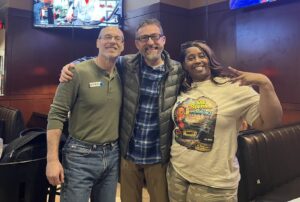
GrownUp T1D is not a group with the budget of some larger diabetes organizations. It is a group built from the ground up. This isn’t Kelly’s job; it’s a creation born from passion, not financial stability. Those of us starting local chapters aren’t employees, we’re part of a movement filling a gap many of us didn’t realize existed until we experienced it.
If you’re interested and there isn’t a local chapter near you, start one.
Reach out at https://grownupt1ds.org/ and become part of something many adults with type 1 diabetes have been waiting for, even if we didn’t know it yet.
Because it turns out growing up with diabetes doesn’t mean you stop needing support.
It just means you finally find people who laugh at the same alarms.